Friday, December 11, 2015

Preserving a Family History...Literally


              Everyone knows or has heard of the tragedy that occurred in Pompeii in 79 A.D. when Mount Vesuvius erupted for two days. The first day the volcano spewed millions of tons of debris that buried Pompeii in increments of 6 inches per hour. The second day Vesuvius produced super-heated rock, ash, and gases that flattened buildings and scalded or suffocated people who had not already been buried the first day. Structures, paintings, mosaics, artifacts, plants, animals, and people were covered and preserved by the volcanic debris. First century Roman writer Pliny the Younger stated, "You could hear the shrieks of women, the wailing of infants, and the shouting of men; some were calling to their parents, others their children or their wives, trying to recognize them by their voices." It has been tricky to recover and preserve the organic material that was preserved, especially the people who were found. Today it is important to preserve the artifacts and people found in Pompeii because they can tell us about what life was like in Pompeii so long ago. This is a struggle because casts were made of people found in Pompeii, but these casts are deteriorating drastically now, mainly casts that were made 150 years ago.
                A major find in Pompeii was a family of four that was found under a staircase of the House of the Golden Bracelet. The family was made up of a man, woman, and two children. Casts were made of this family in the 1970s, but are unfortunately falling victim to years of decay and deterioration. Stefano Vanacore, director of the lab in Pompeii states feels that this issue needs to be taken care of now so that the story of Pompeii’s destruction can be brought to those living now and to future generations. It is also important because research will always be executed on the family found and other people and objects that were found for evidence of how they lived and died, how and what objects were used for, and their local history. Studies on these people will also help us gain an understanding of their eating habits, diseases, and causes of death. Studies will also provide information about some individuals’ lives. Restoring the casts includes cleaning loose debris and the surfaces, reattaching parts, and scanning them for 3-D images.

                Seeing this preserved ancient family brings about many emotions. Vanticore believes that the family found in the House of the Golden Bracelet came together in death, they must have known that the end was coming and made sure they were all together. It is amazing to see this and it serves a one of the many reasons to preserve the family. It is also important to remember that they are not simply artifacts, but are people from a different time that were much like all of us today. 


Source: Lobell, Jarrett A. "Family History: Giving new life to some of Pompeii's dead." Archaeology, Jan./Feb. 2016, 52-55.
Pliny the Younger

Thursday, December 10, 2015

Christmas and The Five and Dime

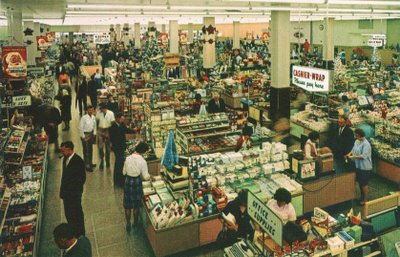
Since it is the Christmas season and everyone out shopping, I am going to take us back into how we shopped with little money back in the 1970s.  The store of choice for parents to take their children to was Woolworth. This five and dime store was a place where siblings could get gifts at a low price. The money we used to purchase these gifts for the siblings was the money we got from doing our assigned chores around the house. No, it wasn't much, but we loved the idea of using our own money to get something special for them.


https://michaellewisart.files.wordpress.com/2011/07/woolworths-houston-tx-1964-pleasantfamilyshopping.jpg

We went shopping in shifts. Each one (I have three siblings) of us had time with Mom or Dad to go out to Woolworth. They had the list with them for each one of us to go by. I loved going shopping at this store. Since our parents bought us the Barbie Dolls and GI Joe (for the only son), we bought the clothes or accessories for Barbie and for my brother, Hot Wheels. Woolworth was the place were the dollar stretched out, allowing us to purchase more.

The new 'five and dime' are the dollar stores. These are great stores for those who now are in the financial pinch and wish to give a their children a good Christmas.

Urban Sprawl - Nebraska vs. Ohio


As I drove west to Nebraska for the internship, I was hoping to see that massive urban sprawl which has hit between Dayton and Cincinnati had not hit much of Iowa and Eastern Nebraska. It had been twelve years since I had made the drive out and after talking with cousins who live in these states, I was a bit worried of what I would see first hand. They all spoke about how Omaha and Lincoln were expanding, Omaha south and Lincoln north, similar to Dayton and Cincinnati. I was apprehensive to how much I-80 through Iowa had changed its landscape.

When I started on I-80 just west of Davenport, I liked what I saw, still open space, farms still striving and no real building off of the interchanges. During our military moves, we always stopped at the I-80 Truck Stop in Walcutt to get a bite to eat and there was plenty of room for us kids to run around and exhaust our energy. They have updated the stop to keep up with the new technology in trucking and now have two options for dining. There is the fast food options in the gift shop area, but they have added a sit down restaurant for those who travel without children. The other addition is they have built a trucking museum next to the truck stop. On the trip back we stayed overnight in Walcutt and stopped in at the museum. It is a small museum and for not being ran by those in the museum field, they have done a good job at the text panels.The only major change in the landscape of Iowa is the farmers have now added wind turbines to their land. Even though these turbines are not too visually appealing, they provide a vertical aspect to the landscape, knowing a lot of people do not take too much pleasure in driving through 'farm country'.

Upon reaching the Iowa/Nebraska border, I could tell that Omaha had expanded northward. I took I-80 through the city. If I had taken the bypass, I would have missed a wonderful welcome of a train to the rightside before getting into the major portion of the city. It did not take too long of a drive to get of the 'urban sprawl'.  I had a different picture in my mind of what I would see from what the cousins described to me. This was not the sprawl which is and is still happening in the Dayton/Cincinnati area of Ohio. Lincoln and Omaha still have plenty of land between the two cities and I hope it never comes to what is happening in Southwestern Ohio on I-75.

My mom was surprised to see the changes in the city where she grew up. Lincoln uses numbers for the streets which run north to south. She remembers when the eastern section of the city ended at 70th Street, which now ends at 84th. The growth has mainly been in the south and southeasterly sections. There are new housing developments, but understandably since their population tends to be growing. A major difference between Dayton and Lincoln, is the usage of previously built on land. When my maternal grandmother passed in 2002, we stayed at a Best Western on O Street. This hotel is no longer there, they REdeveloped the commercial land instead of building in brand new location.

I pulled the 2010 Federal Population Census numbers for all four major cities. Omaha - 446,599, Lincoln - 272,996, Dayton - 141,003, Cincinnati - 298,165.  The amount of growth in these cities is interesting. Omaha and Lincoln with the larger populations are very close to 'farm country', yet have been able to keep their sprawl at a minimum, but Dayton and Cincinnati continue to use up open space.

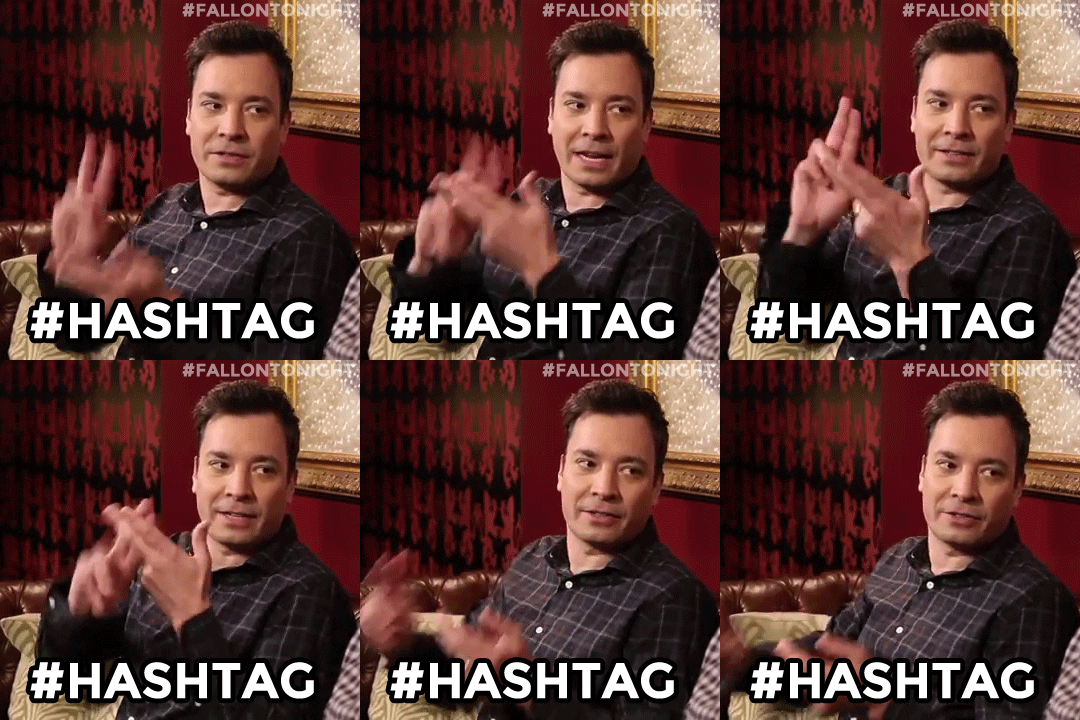
The #history of #hashtag

It would be an understatement to say that social media has become popular over the past few years. Social Media has infiltrated almost every aspect of our lives. We tweet about how are are feeling, we Instagram the food we eat and we vent on Facebook. One of the unifying factors across all social media outlets is the hashtag.

The first hashtag was used in 2007 by Chris Messina (@MrMessina) who tweeted "?how do you feel about using # (pound) for groups. As in #barcamp [msg]??" Messina is credited as a social technology expert and came up with the idea for #hashtags as a way to group discussions on Twitter. Since then #hashtags have been used in every kind of social media outlet. They are relevant on Facebook, Instagram, Flikr, Twitter and others. By tagging a message that message is linked to other message with the same tag. These are used for a wide variety of things such as in marketing campaigns like #I'mlovingit for McDonald's, for showing support such as #ParisAttacks as well as random thoughts or ideas such as #history.

These tags are not limited to a set list of words, you can easily create your own hashtag like #pocketturtle. There are also very few rules to hashtags. The only rules being that there must be no spaces in between words (for some reason) and there of course must be a # in front of the words.(#justcuse) For companies who would like to register their hashtag they need to register with Hashtag.org in order to group the messages that use those tags.

Hashtags are just another way for people to express how they are feeling in the moment. That is really what is at the heart of social media, expression at a moments notice. Of course social media has also been used a tool for bullies, trolls and generally mean spirited people who have nothing good to say about anyone.

The tie in to local history is that social media has become a way to display local history. Many historical societies have a variety of social media accounts and use hashtags as a way to advertise for themselves. (#ohiohistory) In the technological based world we live in, the greater social media presence you have the more chances people will come and visit your institution. I this day and age is it all about the hashtag and what it can do for your local history institution. #wrightbrothers #wsuspecialcollectionsandarchives #blessed

reaction comedy jimmy fallon fallontonight hashtag
Sources: https://www.hashtags.org/featured/hashtag-history-when-and-what-started-it/

The Spot to Eat!

Spot Miller and the original building
In downtown Sidney, just across from the county courthouse, there is a white building with colorful signage. This is the famous Spot, with some of the best pie in Ohio. If you go in, it's like walking back into time. The decorations, down to the red vinyl seats and the black and white tile on the floor transport you to the 1950s. There are signs on the walls, with advertisements of days gone by, when you could get a milkshake for a quarter. Pictures align the wall of the various celebrities that have visited the eatery during its lifetime, including then-president George W. Bush.

It's obvious that the restaurant has a lot of history. But what is that history exactly?

The Spot was founded in 1907. A man named Spot Miller had been selling food from a cart. This was against city ordinances at the time, which banned the sale of food from impermanent structures. His solution was to remove the wheels from his chuckwagon, thus creating a "permanent" structure.

The restaurant would pass through many hands over the 100+ years it has been in operation. A more permanent structure was built on the original location, eventually becoming the building it is today. There was a short-lived chain of restaurants that existed throughout the region, in places such as Piqua, Bellefontaine, and Lima. None of these other locations have survived. The Sidney location, in addition to being the first location, is the only one that is currently in operation.

Pres. Bush appreciating a pecan pie. Pies are a specialty of the eatery.
For 108 years, the Spot has provided delicious hamburgers and milkshakes tot he families of Sidney, Ohio. Though we can no longer enjoy hamburgers for $1.00, the fact that the restaurant is still around keeps a tenuous thread to the towns history. We can sit at the same spot as our ancestors, and enjoy a very similar menu. The Spot has become the most delicious part of Sidney's heritage.


source: http://www.thespottoeat.com/history.html

Brotherhood 2.0

"Good morning Hank, it's Tuesday." These words have begun countless videos made by best-selling author John Green, author of popular young adult novels Paper Towns and The Fault in Our Stars. Green and his younger brother Hank have become internet celebrities, all thanks to their Youtube channel, vlogbrothers.

The conceit of the channel is that the vlogs (video logs) are conversations between the two brothers. In 2007, the two brothers, one living in New York and one living in Montana, decided to not contact each other for an entire year through any "textual" means. That meant no text messaging, no emails, no letters. Phone conversations, in-person meetings, and video blogs. These vlogs would be uploaded onto their channel daily. They did this for an entire year. After the close of 2007, they had managed to build an audience, whom they called "nerdfighters," or those who fight on behalf of nerd-dom. They decided to keep the vlog going, albeit on a looser schedule. They continue to upload videos on a weekly basis to this day, maintaining their internet presence.

But what does this have to do with local history? Everything! One of the things we have been talking about almost since the day we entered our program is the looming day that paper has become extinct and the entire world goes digital. Where historians have turned to letters and diaries in the past to learn about history, future historians will have to rely on digital traces left behind. Sources such as the vlogbrothers will one day become invaluable to these researchers. The structured format of their videos reveals more history than one might suppose at first glance.

Even in videos where there appears to be little substance reveal stories. Take the video embedded below for instance:
In this video John discusses the progress on writing his book, later to be called Paper Towns. The video shot during his song about nannies gives snapshots of the Upper West Side of Manhattan. These are small pieces of what at the time were boring events but even today, only 8 years later, is already history.

Findlay is Changing

In class yesterday we all mentioned how our hometowns are changing. When I went home that night I discovered an article which would continue to change Findlay. Marathon Petroleum has been a part of the community for decades. For years it occupied a single, multi story building in the heart of downtown. Now Marathon has expanded their foot print by tearing down one of their own stations, a historic Elk Lodge and a few other buildings. In their place they are currently building a parking garage and a 100 room hotel. In an announcement on December 7th, Marathon unveiled their plans for the Hancock Hotel. The construction will begin in the spring of 2016 and extend the Marathon complex to the corner of Main and Lincoln which brings the total footprint to a block and a half.

The hotel is due to open in Fall of 2017 and includes a restaurant, bars, and conference rooms. According to an article in The Courier, "The 100,000-square-foot hotel will be open to the public as well as out-of-town Marathon employees, vendors and board members." The original plan for the complex did include a hotel, however those plans were not set in stone upon beginning construction on the parking garage. However this announcement comes with mixed responses. Some see this projects as a great opportunity for jobs and urban renewal while others see Marathon gaining a greater hold on the town. It is no secret that Marathon is a company with a lot of money to burn and it is the biggest company in town beating out the Cooper tire plant on the other end of town.

Marathon has also sponsored the recently opened Performing Arts center a few blocks away. There influence grows by the day. My concern is that when they try to do something that is unneeded or unethical, the town will be powerless to stop it. Our elected officials are not likely to stand up to Marathon because I would not be surprised if some of their campaigns were funded, at least in part, by Marathon.

There is of course some truth that Marathon is pumping money into the community and bringing business to town. If they ever left the town would shrink to half its size and probably die out. However, I am concerned with the amount of power they have over the town. As long as they use their power for good there will be little resistance. However, if they push for unwanted improvements or openly interfear with our elected officials I wonder who would be able to stop them.

Current building                                                               Hancock Hotel

Image result for Marathon Findlay Ohio                                                                                   Image result for courier Hancock Hotel


Sources: http://thecourier.com/breaking-news/2015/12/07/marathon-announces-details-for-new-20-million-downtown-hotel/